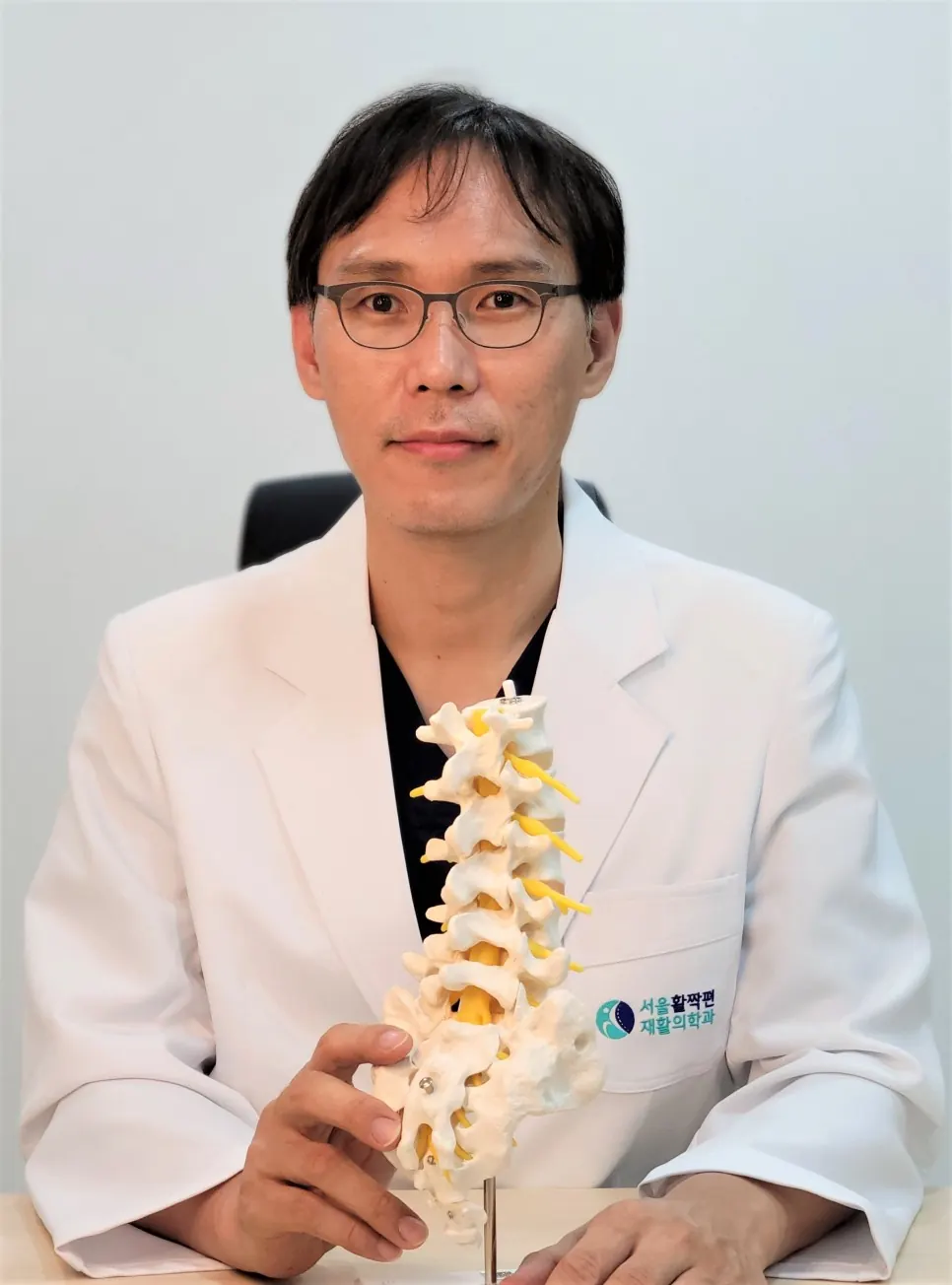
I extend my greetings on behalf of Dr. Lee Jin-young, the clinic’s director.
In a previous post, I introduced you to the concept of "Turtle Neck Syndrome." It's a condition where the normal C-shaped curve of the cervical spine collapses due to habitual poor posture, resulting in a straight or reverse C-shaped curve.
However, there is also a normal C-shaped curve in the lumbar spine. This C-shaped curve in the lumbar spine is also very important for spinal health. This lumbar spine can also be transformed into a straight or reverse C-shaped curve. In other words, we can say that "Turtle Neck Syndrome" can also occur in the lumbar spine.
Recently, there has been a growing trend of patients complaining about "straight waist syndrome" due to the habit of bending the waist and sitting for long periods while using smartphones and computers.
So today, I will briefly explain the causes and dangers of "straight spine syndrome," also known as "postural kyphosis."

A while ago, I got an X-ray at the orthopedic department to get checked after a recent contact accident. However, while most people have an S-shaped spine when viewed from the side, mine was completely straight. When I asked if there was a problem, they mentioned "straight spine" as if it wasn't a big deal. So, I got worried and decided to see a specialist. Is it really nothing serious? Can manual therapy help improve it?
What is a straight spine?
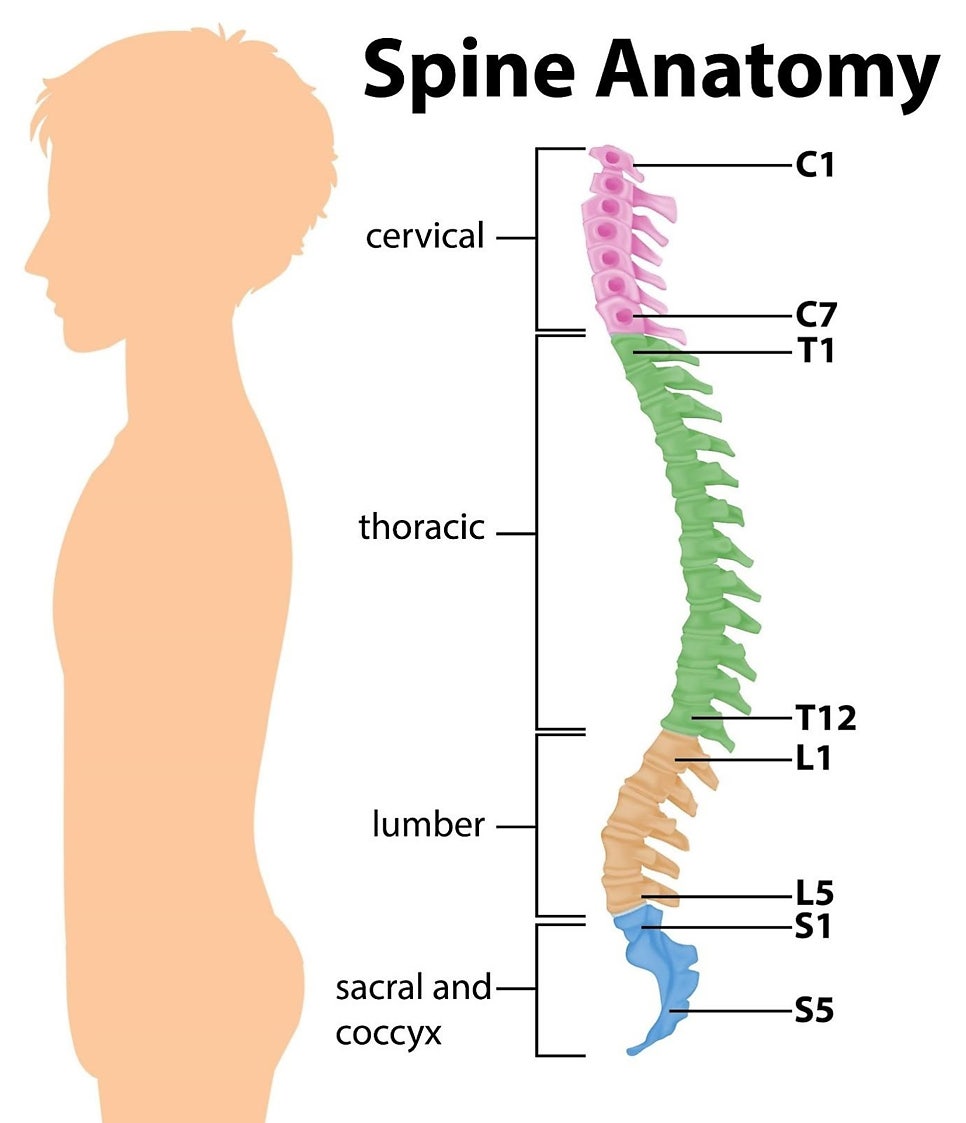
The spine should be straight when viewed from the front, and when viewed from the side, the cervical and lumbar spine should form a forward C-shaped curve, while the thoracic spine should form a backward C-shaped curve, creating an S-shaped curve overall.
However, a straight spine refers to a condition where the lumbar spine is not in a C-shaped curve but appears straight instead.
A straight spine increases the load on the spine compared to a normal spine. The C-shaped curve effectively reduces the load that the spine must support, so if this curve is lost, the load increases accordingly. Therefore, various secondary problems can occur.
Therefore, correction is necessary.
Causes and symptoms of a straight spine?
The main causes of a straight spine are usually incorrect posture and lack of exercise.
Especially for those who work in offices, they tend to sit for long periods at home and at work, looking at computer screens and using smartphones. It is easy to sit in a posture leaning against the back of the chair with the buttocks pulled forward. This posture is a cause of pushing the lumbar spine's lordotic curve backward.
Also, lack of exercise weakens the muscles. If the muscles of the buttocks, lower back, and thighs weaken, they cannot properly support the spine, increasing the likelihood of developing a straight waist.
The following postures and habits can cause a straight spine: Sitting with legs crossed. Bending the back to look at computer monitors, smartphones, or books. Sitting with the buttocks pulled forward and leaning only on the back. Frequently engaging in exercises that involve rotating in one direction, such as golf or tennis. Lack of exercise. Lifting heavy
The reasons why a straight spine is dangerous are as follows
The main danger of a straight spine is that you may not feel any symptoms initially, and only become aware of it when secondary conditions develop.
For instance, the patient mentioned earlier went about their daily life without any noticeable symptoms until they happened to have an X-ray taken by chance and discovered the condition.
A straight spine may not cause any significant symptoms initially, but as it progresses and becomes severe enough to lead to secondary conditions, symptoms such as back pain and fatigue may occur.
A straight spine can lead to pelvic imbalance, postural kyphosis, lumbar disc problems, and more. When an abnormality occurs in the normal curvature of the spine, other curvatures may also become more distorted in order to compensate, leading to further deformities in other areas.
If you experience the following symptoms, you should consider the possibility of a straight spine: Difficulty putting your hands under your lower back when lying flat on your back Knees pushed back when standing Having a straight waist along with a turtle neck Stiffness in the lower back, making it difficult to arch backward
How to correct a straight spine?
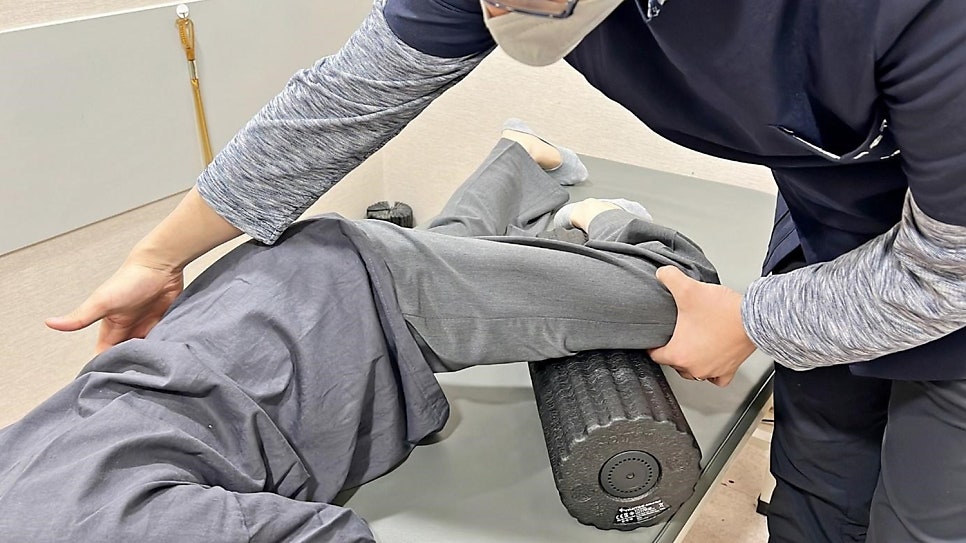
Correcting improper posture and effective treatment through manual therapy can help correct a straight spine.
A straight spine, where the normal C-shaped curve of the lumbar spine is lost, often accompanies other deformities such as a posterior pelvic tilt or turtle neck.
Therefore, comprehensive correction of body shape and posture is necessary. Strengthening the muscles of the lower back, buttocks, and thighs, and correcting the alignment of the pelvis to restore the normal lordotic curve of the lumbar spine is essential.
Manual therapy is a suitable treatment for such correction. A skilled therapist can realign the joints and relieve muscle and ligament stiffness and tension through manual manipulation and therapeutic tools.
At Seoul Painfree Rehabilitation Medicine Clinic, we specialize in professional posture and body shape correction!
At Seoul Painfree Rehabilitation Medicine Clinic, you can receive specialized manual therapy from experts holding a Doctor of Chiropractic (D.C) license from the United States, with approximately 50 such experts in Korea.
This license is accredited in the United States and requires an 8-year education program and passing 4 exams. These experts are among the best in Korea and are currently educating other manual therapists.
"Relieving pain and restoring mobility." We hope you choose Seoul Painfree Rehabilitation Medicine Clinic for more professional and effective posture and body shape correction.
Thank you.