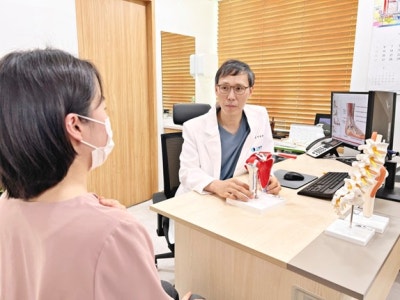
I extend my greetings on behalf of Dr. Lee Jin-young, the clinic’s director.
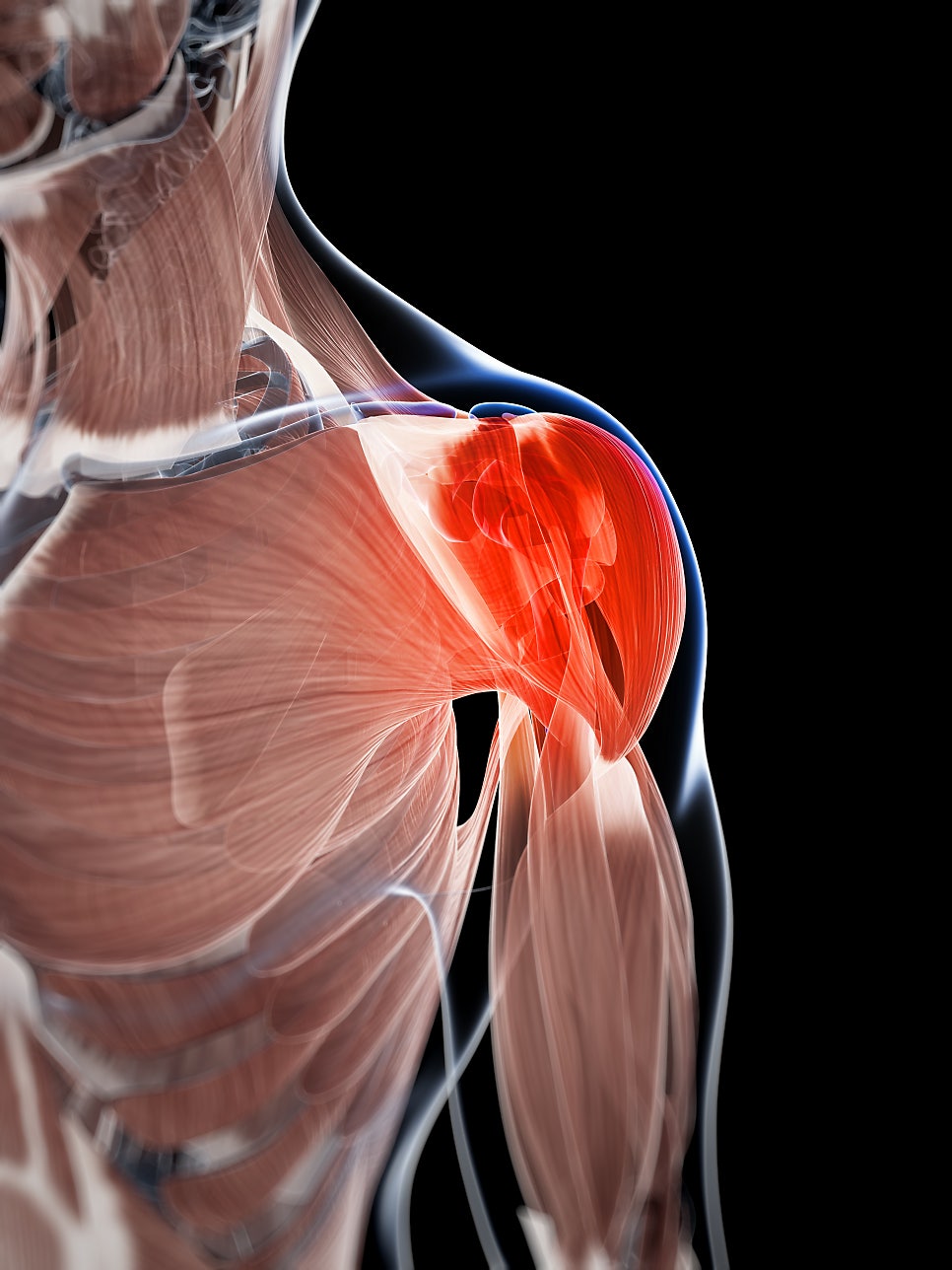
The shoulder joint, commonly referred to as the glenohumeral joint, is formed by the articulation of the shoulder blade (scapula), upper arm bone (humerus), and collarbone (clavicle). Due to the relatively narrow contact surface between the humeral head and the glenoid cavity, the shoulder joint has the widest range of motion among all joints in the human body. The shoulder joint plays a crucial role in connecting the torso to the arm. It is surrounded by soft tissues, including ligaments and muscles, to prevent dislocation. When abnormalities occur in the shoulder joint, it can lead to reduced propulsion strength and difficulties in performing precise movements during work or exercise.
For the past few days, I've been hearing cracking sounds from my shoulders, and it hurts even when I'm not moving. My shoulders have been a bit painful for about two months, and lately, the pain has increased since I started fitness training. After searching on the internet, it seems similar to the symptoms of shoulder impingement syndrome. I wanted to check and get treatment.
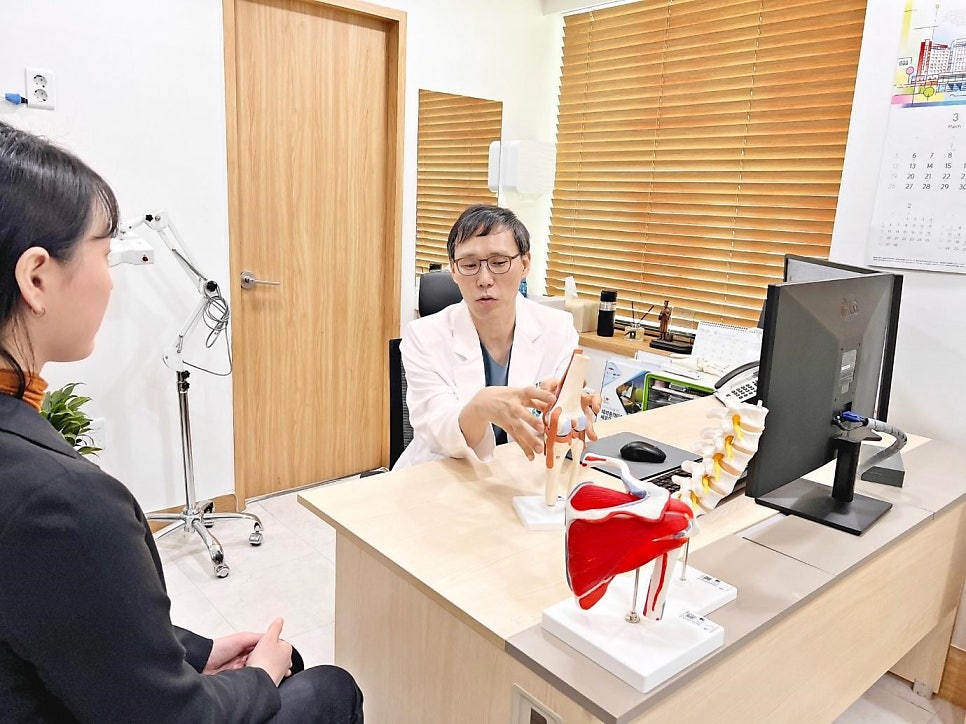
A patient recently visited with symptoms similar to those mentioned above. What is shoulder impingement syndrome that this patient suspects, and what are the causes and symptoms? Today, let's explore the shoulder impingement syndrome, a condition commonly encountered by modern individuals.
What is shoulder impingement syndrome?
The name "shoulder impingement syndrome" seems to be well descriptive. It is a condition where collisions in the joints connecting the bones in the shoulder cause pain. The condition occurs when the space in the shoulder joint narrows, causing the acromion and the head of the humerus to collide.
This collision can damage the acromion bursa and the rotator cuff tendons, and in severe cases, it can lead to muscle tears. While this shoulder condition commonly occurs in middle-aged individuals, it has recently been observed in younger individuals who engage in frequent computer work.
Severe collisions during movements such as raising the arm above the head or reaching the arm backward can result in a "cracking" sound and complaints of pain. This limitation in arm movement can lead to further restricted range of motion. In some cases, individuals may find it challenging to lie down on the affected side, and severe pain can even disrupt sleep throughout the night.
It is also prevalent in professions that involve frequent use of the shoulders, such as swimmers or baseball players, earning it nicknames like 'swimmer's shoulder' or 'thrower's shoulder.'
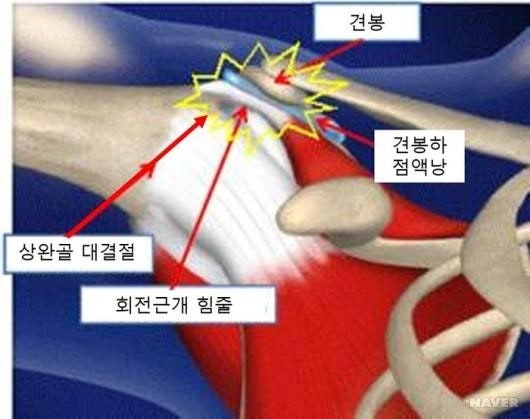
As depicted in the above picture, during movements of raising the arm and reaching it backward, the muscles and bones move in the direction of the arrows, causing a narrowing of the joint space and resulting in collision phenomena.

What are the causes of shoulder impingement syndrome?
The main causes can be attributed to a narrowing of the space and increased instability in the shoulder.
Firstly, factors contributing to the narrowing of the space include degenerative changes, such as the bone of the acromion growing and colliding with the head of the humerus, and a significant reduction in the elasticity of the rotator cuff tendons, preventing the humeral head from entering the joint.
Secondly, in cases of severe shoulder instability, even when there is sufficient space in the shoulder joint, increased instability can lead to collisions. Frequent collisions can damage the rotator cuff tendons, causing inflammation and weakening the rotator cuff, hindering its proper function.
Due to these reasons, when raising the arm, the humeral head may not remain fixed, and it can collide with the acromion during the upward movement.
What are the symptoms of shoulder impingement syndrome?
The main symptoms include a 'clicking' or 'cracking' collision sound and pain.
Pain accompanies the act of raising and reaching the arm overhead, and the pain intensifies at night, leading to sleep disturbances. Additionally, there may be pain in the back of the neck and tingling in the arm, similar to symptoms of cervical disc issues.
It is crucial to differentiate shoulder impingement syndrome from other shoulder conditions like rotator cuff injuries, and a precise diagnosis from a specialist is required to assess the possibility of associated damages such as rotator cuff tears.
We strive to provide personalized treatment for each patient.
Each patient has unique lifestyle habits, occupations, body types, postures, and individual environments. This is why even for the same condition, treating it in a standardized way may feel insufficient. It is essential to provide tailored treatment based on the characteristics and circumstances of each patient.
At Seoul Wide Open Rehabilitation Medicine Clinic, we make efforts towards this goal by conducting case studies twice a month. Through this, we explore and discuss the most appropriate treatments from various perspectives for each patient, considering what therapies may be optimal.
All members of the Wide Open staffs are committed to providing the best possible care with a sense of mission for the patient's health recovery.
If you suspect shoulder impingement syndrome, we encourage you not to endure it and seek accurate diagnosis and treatment from a specialist.
Thank you.