Welcome to the blog of Seoul Painfree Rehabilitation Clinic, where we help you “free from pain.”
In general, the main goal of treating musculoskeletal disorders is to relieve pain. However, there are cases where applying controlled stimulation to the painful area itself can be an effective treatment method.
One such method is Extracorporeal Shock Wave Therapy (ESWT), a representative non-surgical treatment option.
I’ve been struggling with Achilles tendinitis for a long time. I even received several injections at other clinics, but the improvement has been minimal. Is there a treatment that is both effective and safe, without major side effects, and can be performed conveniently?
ESWT can be applied to various conditions affecting the spine, joints, and other musculoskeletal areas.
In today’s post, we will explain how ESWT works and what principles make it effective.
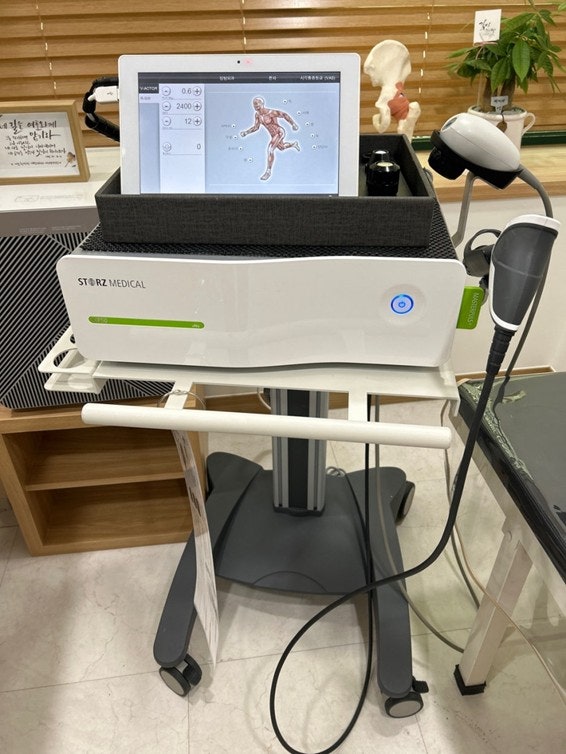
What is Extracorporeal Shock Wave Therapy (ESWT)?
ESWT is a treatment that activates the body’s own cells to reduce inflammation and relieve pain. It works by applying shock waves from outside the body, which stimulate surrounding tissues and promote revascularization (the formation of new blood vessels). This process helps alleviate inflammation and pain in the spine and joints.
Simply put, ESWT delivers focused energy to the painful area. This stimulation induces the formation of small new blood vessels, which in turn improves blood circulation and accelerates the healing of surrounding tissues such as muscles, ligaments, and bones.
In this way, ESWT enhances the body’s natural healing ability without the need for medication or surgery, making it one of the most widely used non-invasive treatment methods today.
How Does ESWT Work?
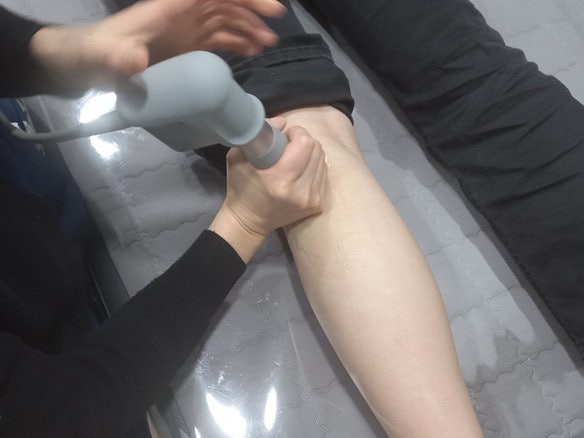
Extracorporeal Shock Wave Therapy (ESWT) delivers energy to the affected area, stimulating the body’s natural healing process.
During treatment, about 1,000 to 1,500 shock waves are continuously applied to the painful site, which helps activate the recovery of surrounding tissues.
Sometimes patients ask, “Isn’t this the same treatment used for kidney stones?” That’s correct.
ESWT was initially introduced for the treatment of kidney stones. However, it was later found to be effective in relieving musculoskeletal pain as well. In 2002, the U.S. Food and Drug Administration (FDA) approved ESWT as an effective treatment for this purpose.
Although the principle is similar to kidney stone therapy, when applied to the spine and joints, shock waves act directly on painful areas to reduce inflammation, relieve pain, and promote the regeneration of damaged tissues.
Which Areas Can ESWT Be Used For?
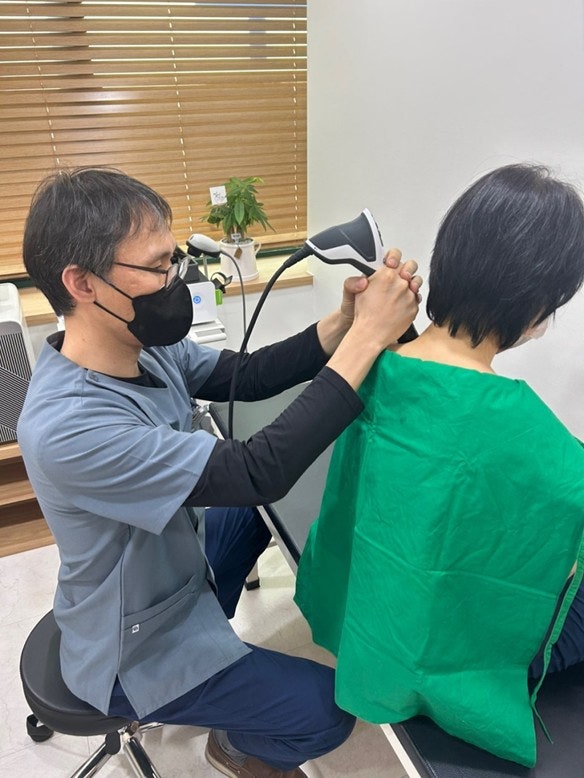
Extracorporeal Shock Wave Therapy (ESWT) can be applied to almost any part of the body.
One of its main advantages is its versatility—it can be effectively used on the shoulders, ankles, lower back, and many other areas. Because of this, ESWT is often chosen as a first-line treatment to help relieve pain caused by inflammation-related conditions.
◼ Knee Conditions Acute and chronic pain around the knee caused by muscle pain or arthritis Inflammation inside the joint Sports-related injuries ◼ Shoulder Conditions Chronic shoulder pain Frozen shoulder (adhesive capsulitis) Rotator cuff tears Calcific tendinitis Tennis elbow, golfer’s elbow Sports injuries ◼ Foot & Ankle Conditions Ankle sprains Plantar fasciitis Achilles tendinitis Muscle pain around the ankle Ankle joint pain ◼ Spine & Hip Conditions Acute lower back pain Herniated discs Spinal stenosis and other degenerative disorders Neck pain Various types of pelvic pain Sports injuries
How Many Sessions and How Long Does Treatment Take?
The number of ESWT sessions and the overall treatment duration vary depending on each patient’s condition.
Because the effects are not always immediate, changes are usually monitored over a period of about four weeks after treatment.
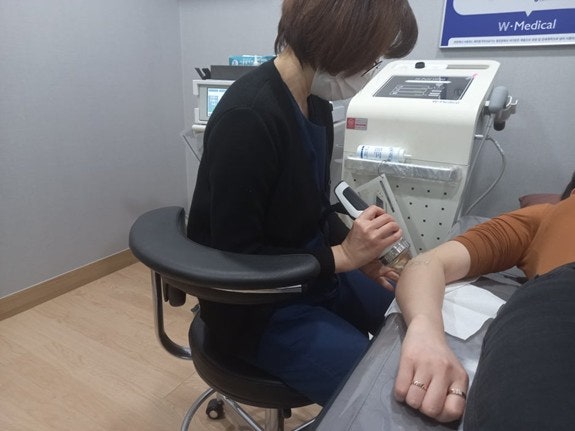
For this reason, ESWT is not a one-time therapy; it is typically performed two to three times at intervals of about one week.
Each treatment session usually lasts 20 to 40 minutes, and the total number of sessions is determined in consultation with the physician, based on the patient’s specific condition.
Precautions
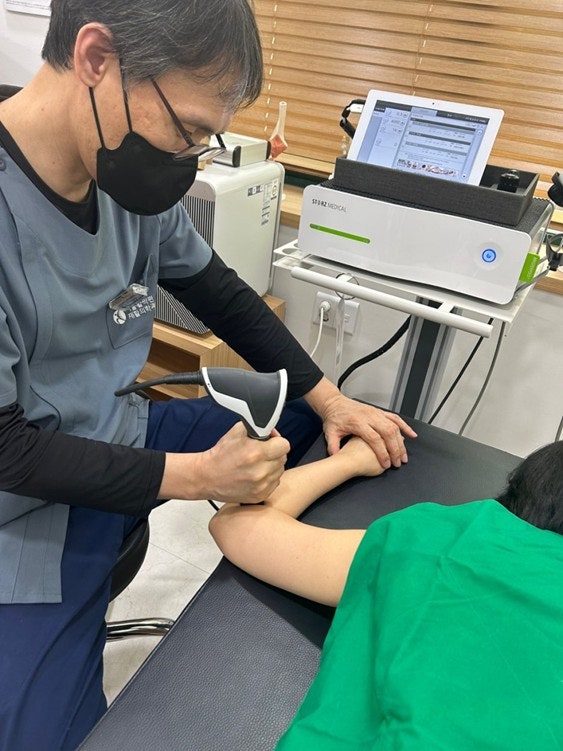
During and after ESWT, some discomfort or pain may occur.
Because shock waves are applied directly to the painful area, it is not uncommon to feel temporary pain during treatment. In some cases, symptoms may even feel worse immediately afterward. However, this is usually a short-term response to the stimulation of the affected tissues and is generally not a cause for concern.
That said, if symptoms such as persistent headaches, hematoma (bruising), skin redness, or continuous pain occur after treatment, it is recommended to revisit your doctor for further evaluation.
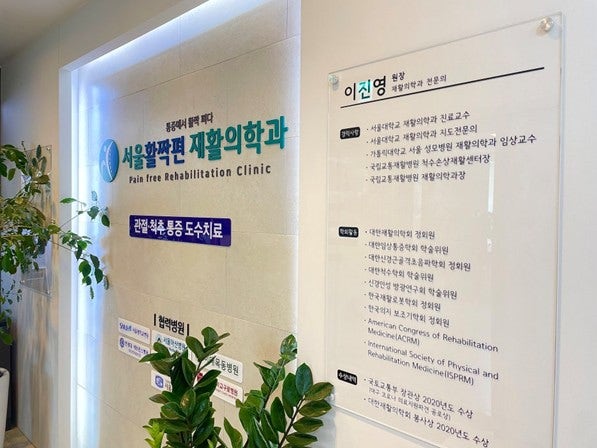
ESWT at Seoul Painfree Rehabilitation Clinic Is Effective!
At Seoul Painfree Rehabilitation Clinic, we conduct weekly case studies of patients undergoing shock wave therapy. This allows us to take a multi-faceted, individualized approach to each patient’s treatment.
Our therapists also complete specialized training programs offered by Storz Medical, the official domestic headquarters of the ESWT manufacturer, to continuously improve their clinical skills.
We strive not only to treat the painful area itself but also to address the underlying causes that trigger the pain.
At Seoul Painfree Rehabilitation Clinic, our mission is to help you “free from pain” and support your return to a healthy daily life.
Thank you.