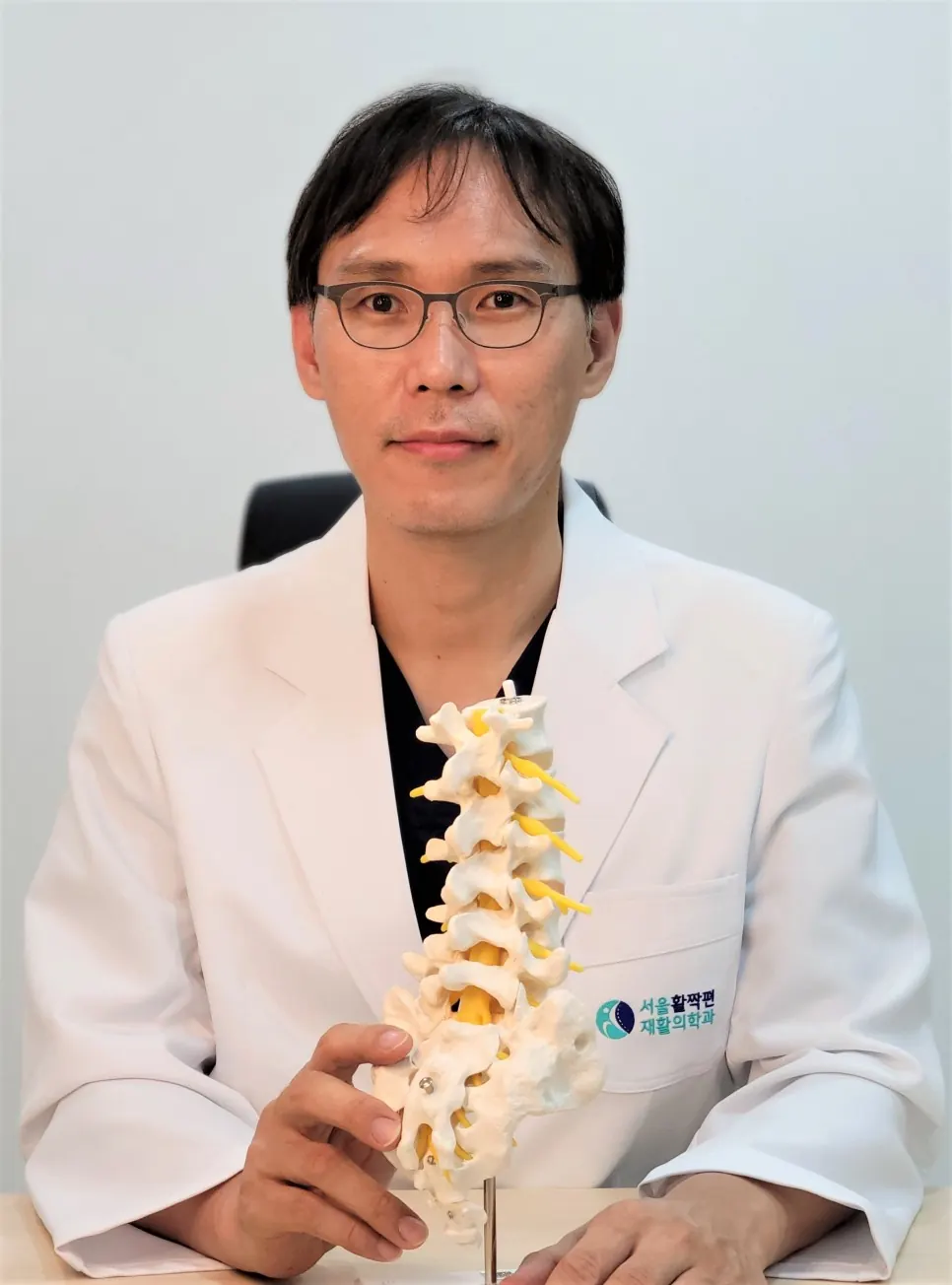
Recently, we have been seeing a growing number of patients visiting our clinic with complaints of leg weakness or sudden loss of strength in the legs.
Many people assume that these symptoms are simply due to aging or a lack of exercise and tend to overlook them. However, if your legs repeatedly feel weak or your knees feel like they cannot support your weight when climbing stairs, it is important to have the condition properly evaluated.
In particular, if one leg becomes noticeably weaker than the other, or if weakness is accompanied by numbness or tingling, the cause may be something more than simple muscle fatigue. For our bodies to move normally, nerve signals from the brain must be transmitted accurately to the muscles. If there is a problem anywhere along this pathway, it may appear externally as simple muscle weakness, but the underlying cause could actually be related to the nerves.
Not long ago, a patient visited Seoul Painfree Rehabilitation Medicine Clinic because of weakness in the left leg. The patient had been experiencing lower back pain for about a month and a half, and was unable to lift the ankle upward.
Along with the weakness, there was also numbness and a squeezing or cramping discomfort in the leg.
The key issue was nerve compression originating from the lower back, which was affecting both sensation and muscle strength in the leg. After identifying the cause, we proceeded with decompression treatment to reduce the pressure on the nerve, and the patient’s condition improved.
In cases like this, when patients experience symptoms such as leg weakness or loss of muscle strength, we perform an electromyography (EMG) test to accurately identify the underlying cause. Based on the results, we proceed with treatment using ATT robotic spinal decompression therapy.
Today, we will take a closer look at both the diagnostic test and the treatment method. If you are experiencing similar symptoms, we encourage you to read through the information below carefully.
Table of Contents
Main Causes of Leg Weakness and Muscle Strength Loss Evaluating Nerve and Muscle Function with an EMG Test What Is ATT Robotic Decompression Therapy? Patient-Customized Settings and Safety Verification Process

Main Causes of Leg Weakness and Loss of Muscle Strength
Symptoms of weakness in the legs can generally be divided into nerve-related problems and muscle-related problems. When the nerves that run down from the lower back are compressed, conditions such as a herniated disc (lumbar disc herniation) or spinal stenosis can often be the cause. In these cases, leg weakness may appear along with numbness or tingling in the legs.
In addition, peripheral nerve function can decline due to conditions such as diabetes or nutritional deficiencies, which may also lead to a feeling of reduced muscle strength. In these situations, symptoms may include reduced sensation in the soles of the feet or calf muscles that become fatigued more easily.
Problems within the muscles themselves, such as muscle atrophy or inflammation, can also be responsible. While it may appear to be simple muscle weakness on the surface, the underlying cause may actually involve abnormal nerve signal transmission, which is why proper evaluation and differentiation are important.
Evaluating Nerve and Muscle Function with an EMG Test
An electromyography (EMG) test is used to evaluate the electrical signal transmission between nerves and muscles. The examination generally consists of two main parts: a nerve conduction study and a muscle EMG test.
The nerve conduction study measures how quickly and accurately nerves transmit signals. Small electrodes are placed on the surface of the skin to stimulate the nerve and record the response. If the signal becomes slower or weaker at a certain point, it may indicate nerve compression or nerve damage in that area.
The muscle EMG test involves inserting a very thin needle electrode into the muscle to observe the electrical activity both at rest and during muscle contraction. This helps determine whether the problem originates from the nerve supplying the muscle or from the muscle tissue itself.
On the day of the examination, it is recommended not to apply lotions or creams to the skin, as they can interfere with the electrodes. Patients should also inform the medical staff in advance if they are taking anticoagulant medications or have any implanted cardiac devices.
What Is ATT Robotic Decompression Therapy?
ATT robotic decompression therapy is a non-surgical treatment option that may be considered when nerve compression—such as in cases of herniated lumbar discs or spinal stenosis—causes pain or a decrease in muscle strength.
Unlike simple traction methods that strongly pull on a specific area, this treatment uses computer-controlled equipment to gradually reduce the pressure applied to the spine.
As the space between the vertebrae increases, the pressure placed on the nerves may be relieved. Through this process, patients may experience reduced pain and improved comfort in movement. This method is also sometimes referred to as zero-gravity decompression therapy, as the treatment is performed while minimizing the load placed on the body.
When diagnostic tests confirm that nerve compression is the cause of muscle weakness, decompression therapy like this can help create an environment that supports nerve recovery.
Patient-Customized Settings and Safety Verification Process
The ATT robotic system is not a simple traction device. It is a robotic system that automatically adjusts based on the patient’s physical information. Before treatment begins, details such as body weight, height, and the location of pain are entered to create a personalized treatment program.
After the patient is positioned on the device, a test run of about 1–5 minutes is conducted. During this stage, the medical staff checks whether the applied pressure is appropriate and whether the patient experiences any discomfort. Once everything is confirmed, the full treatment session begins, and the traction intensity is continuously and precisely adjusted in real time.
Because the system is computer-controlled, it is designed to minimize excessive pulling and reduce unnecessary strain on the body. When leg weakness and loss of muscle strength are related to nerve compression, this type of decompression therapy may be considered as one of the conservative (non-surgical) treatment options.

At Seoul Painfree Rehabilitation Medicine Clinic, treatment plans are tailored based on the results of the EMG (electromyography) test. Depending on the patient’s condition, a range of therapies—such as ATT robotic decompression therapy and manual therapy—can be provided.
In particular, patients can undergo an EMG test on the same day and review the results immediately, which allows our medical team to establish an appropriate treatment plan without delay.
Our clinic also offers evening appointments on Wednesdays and Sunday consultations, making it easier for office workers and students to visit and receive evaluations for various symptoms.
If you are experiencing discomfort such as numbness or pain, we encourage you to visit Seoul Painfree Rehabilitation Medicine Clinic at any time for a thorough evaluation and consultation.
Thank you.